If you are engineering Voice AI applications for the Indian market, you have likely encountered the most significant bottleneck in the industry: telephony infrastructure.
While Large Language Models and Text-to-Speech engines have reached sub-second response times, routing that audio through the Public Switched Telephone Network (PSTN) using standard Session Initiation Protocol (SIP) trunks often introduces unacceptable latency. In a voice interface, a delay of even 1.5 seconds destroys the illusion of human conversation, causing users to talk over the AI or abandon the call entirely.
Today, we are announcing a structural solution to this problem. The official native integration between Vobiz and Vapi is now live.
Why This Architecture Matters
This integration bridges Vobiz's robust, regionally localized Indian telephony network directly with Vapi's advanced AI orchestration layer. By bypassing legacy telecom intermediaries and utilizing direct UDP transport routing, this architecture delivers:
- Instant Access to Indian DIDs: Provision real, local +91 phone numbers in seconds without dealing with traditional telecom red tape.
- Optimized Latency: By enforcing UDP transport on port 5060 and establishing direct signaling paths, we minimize packet overhead and jitter, resulting in near-instantaneous audio delivery.
- Bidirectional Capability: Seamlessly handle both high-volume outbound dial-outs and complex inbound routing to specific AI assistants.
How to Implement the Integration
We've designed this to be deployable in minutes, eliminating the need to manage your own FreeSWITCH or Asterisk servers.
Phase 1: Outbound Calling Architecture To enable your AI to dial out to customers, you must establish a secure SIP trunk from Vapi to Vobiz. You will create a credential list in your Vobiz console and generate an Outbound Trunk. You then input the provided Vobiz SIP Domain into Vapi, ensuring you strictly select UDP as the transport protocol. Once authenticated, you can link a purchased Vobiz number as your Caller ID, allowing your AI to initiate calls instantly.
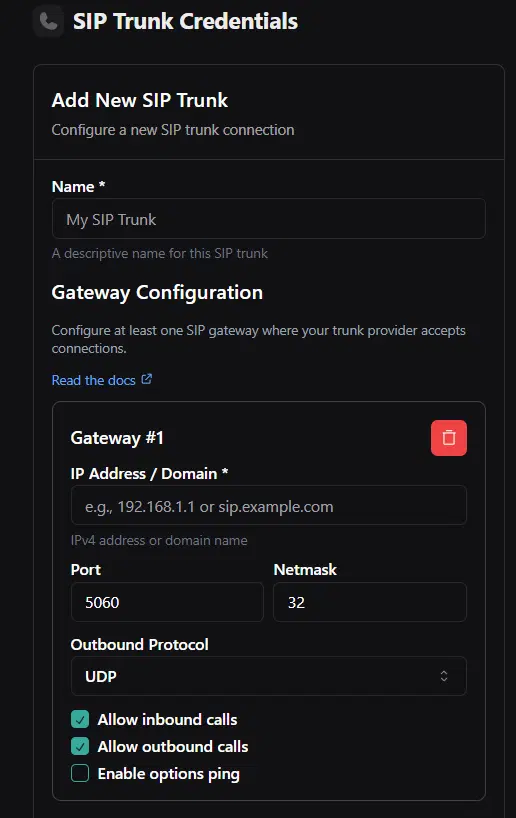
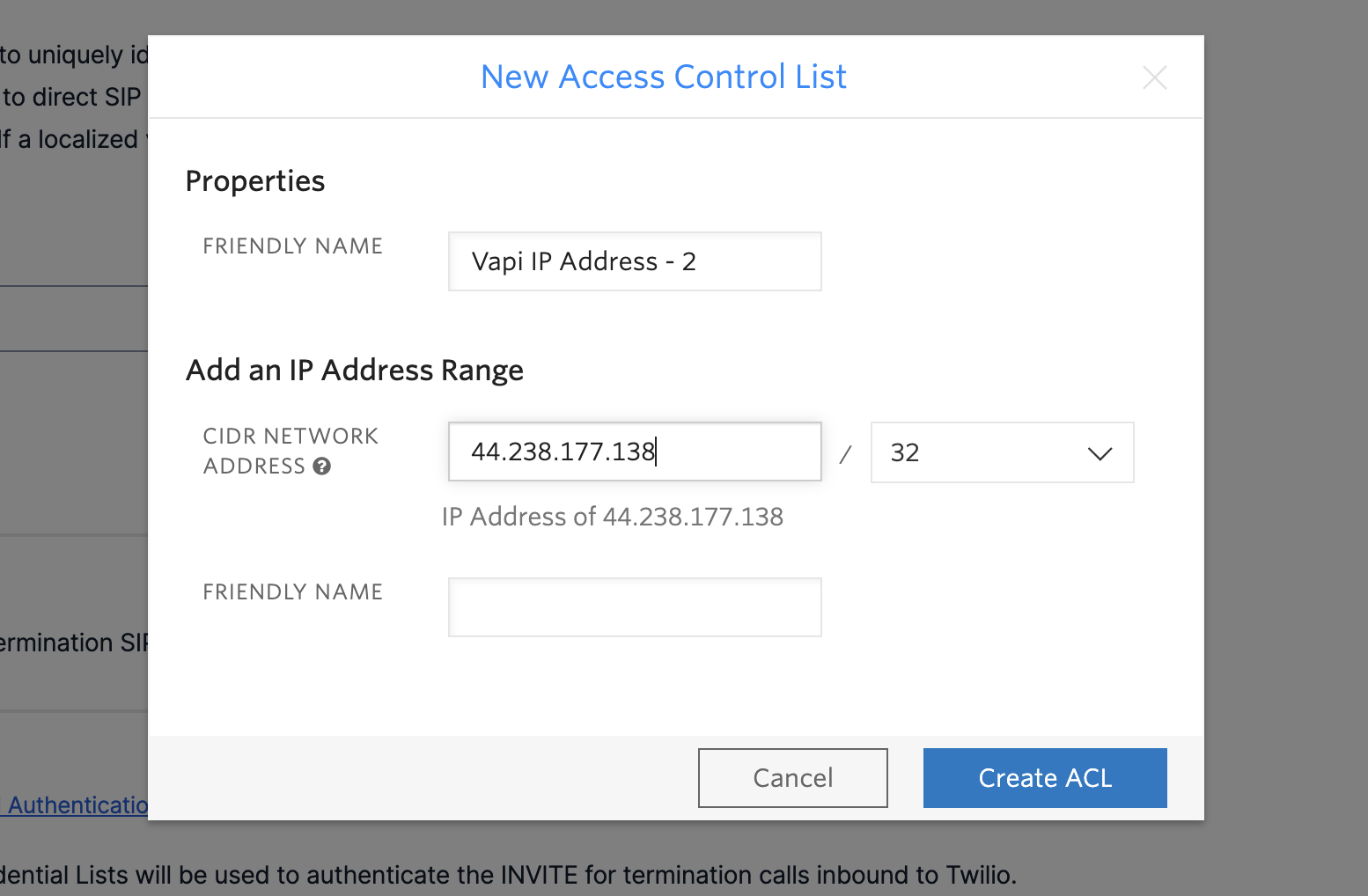
Phase 2: Inbound Calling Architecture Inbound routing requires mapping a PSTN signal from Vobiz to a specific AI agent instance inside Vapi. First, you whitelist the Vobiz Gateway IP address within Vapi. Next, you query the Vapi API to fetch your unique Trunk UUID. You then use this UUID to construct a Primary SIP URI in Vobiz (format: [UUID].sip.vapi.ai). When a user dials your Vobiz number, the call is instantly routed to that URI, triggering your designated Vapi assistant.
Start Building
The infrastructure is no longer the bottleneck. Whether you are deploying AI Sales Development Representatives to qualify leads within seconds of a form fill, or building a scalable Tier-1 customer support desk, the foundation is ready.
We have published a comprehensive video walkthrough documenting every step of the configuration process.
Watch the Integration Masterclass Video
Documentary guide for low-latency voice AI deployment.